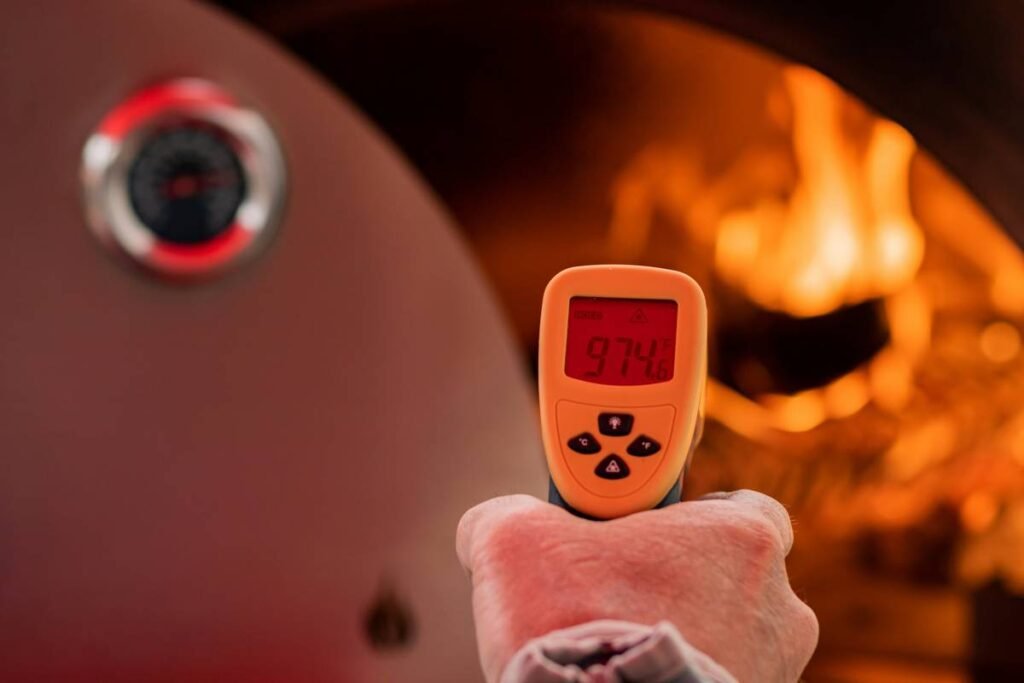
You’re halfway through making caramel. The sugar’s bubbling. You glance at your candy thermometer—it reads 320°F. But your recipe says “hard crack” starts at 300°F. Panic sets in. Did you burn it? Or is your thermometer lying? This isn’t just about ruined batches—it’s about wasted time, money, and confidence. A reliable candy thermometer temperature chart isn’t optional. It’s your lifeline.
Why Most Candy Thermometers Fail You (Even the Expensive Ones)
Calibration drift is real—and manufacturers won’t tell you this. Digital probes degrade faster than analog glass when exposed to repeated thermal shock. And that $40 “professional” model? It might be accurate on day one. But after six months of boiling sugar and ice baths? Accuracy plummets by ±5°F or more.
Worse: most home cooks never test calibration. They assume “digital = precise.” Reality check: without regular ice-point verification, your thermometer is just a fancy paperweight—and your confections pay the price.
candy thermometer temperature chart: From Sugar Syrup to Hard Crack—Done Right
Forget vague labels like “soft ball” or “firm crack.” Here’s how to nail every stage—with science, not guesswork.
Step 1: Calibrate Before Every Batch
Dump your thermometer into an ice-water slurry (crushed ice + cold water, stirred well). Wait 30 seconds. It must read 32°F (0°C). If not, note the offset—and subtract it from every reading.
Step 2: Use a Clip, Not a Spoon
Dangling a probe with a spoon invites splashes, steam burns, and inconsistent depth. Clip it to the pot rim so the tip sits fully submerged—but never touching the bottom. Metal conducts heat differently than sugar syrup; false lows are guaranteed if you skip this.
Step 3: Trust the Chart, Not the Color
Caramel darkens under ambient light. Humidity shifts evaporation rates. Your eyes lie. Your calibrated thermometer doesn’t.
| Stage | Temperature Range (°F) | Temperature Range (°C) | Water Content Remaining | Ideal For |
|---|---|---|---|---|
| Thread | 223–234°F | 106–112°C | ~80% | Sugar syrups, fruit preserves |
| Soft Ball | 234–240°F | 112–116°C | ~20% | Fudge, fondant |
| Firm Ball | 242–248°F | 116–120°C | ~15% | Caramel candies, soft caramels |
| Hard Ball | 250–266°F | 121–130°C | ~9% | Toffee, nougat |
| Soft Crack | 270–290°F | 132–143°C | ~5% | Taffy, butterscotch |
| Hard Crack | 300–310°F | 149–154°C | ~1% | Lollipops, brittles |
| Caramelized Sugar | 320–350°F | 160–177°C | 0% | Caramel sauce, spun sugar |
Pro Tip: Stirring Changes Everything
Stirring cools the mixture locally. Always stop stirring 2–3 minutes before target temp. Let convection even out hotspots. Then—only then—take your final reading.
The Industry Secret: Why Pastry Chefs Keep Two Thermometers
Top confectioners don’t rely on one device. They use a primary digital for speed—and a backup analog glass thermometer as a cross-check. Why? Glass thermometers don’t suffer electronic drift. They’re slower, yes—but brutally honest. When sugar costs $20/lb in bulk and batches run 20 gallons, redundancy isn’t paranoia. It’s profit protection.
And here’s what no brand will admit: the “auto-hold” feature on many digital models is often triggered by minor fluctuations—freezing the display just as temps peak. You think you hit 300°F. Really, it peaked at 312°F and crashed. That brittle? Now it’s burnt ash.
FAQ
Can I use a meat thermometer instead of a candy thermometer?
No. Meat thermometers max out around 220°F—far below the 300°F+ needed for hard crack. Their probes also aren’t designed for prolonged exposure to boiling sugar, which can damage sensors.
How often should I calibrate my candy thermometer?
Before every major batch. Thermal stress from rapid cooling (like rinsing in cold water post-use) throws off calibration faster than you think.
Why does my sugar keep crystallizing even with perfect temp control?
Trace amounts of undissolved sugar on the pot walls act as nucleation sites. Always wash down sides with a wet pastry brush during early heating—even if your candy thermometer temperature chart says you’re on track.